How to Store Tires So They're Still Good Next Season
July 26, 2026 · ExtraBrake
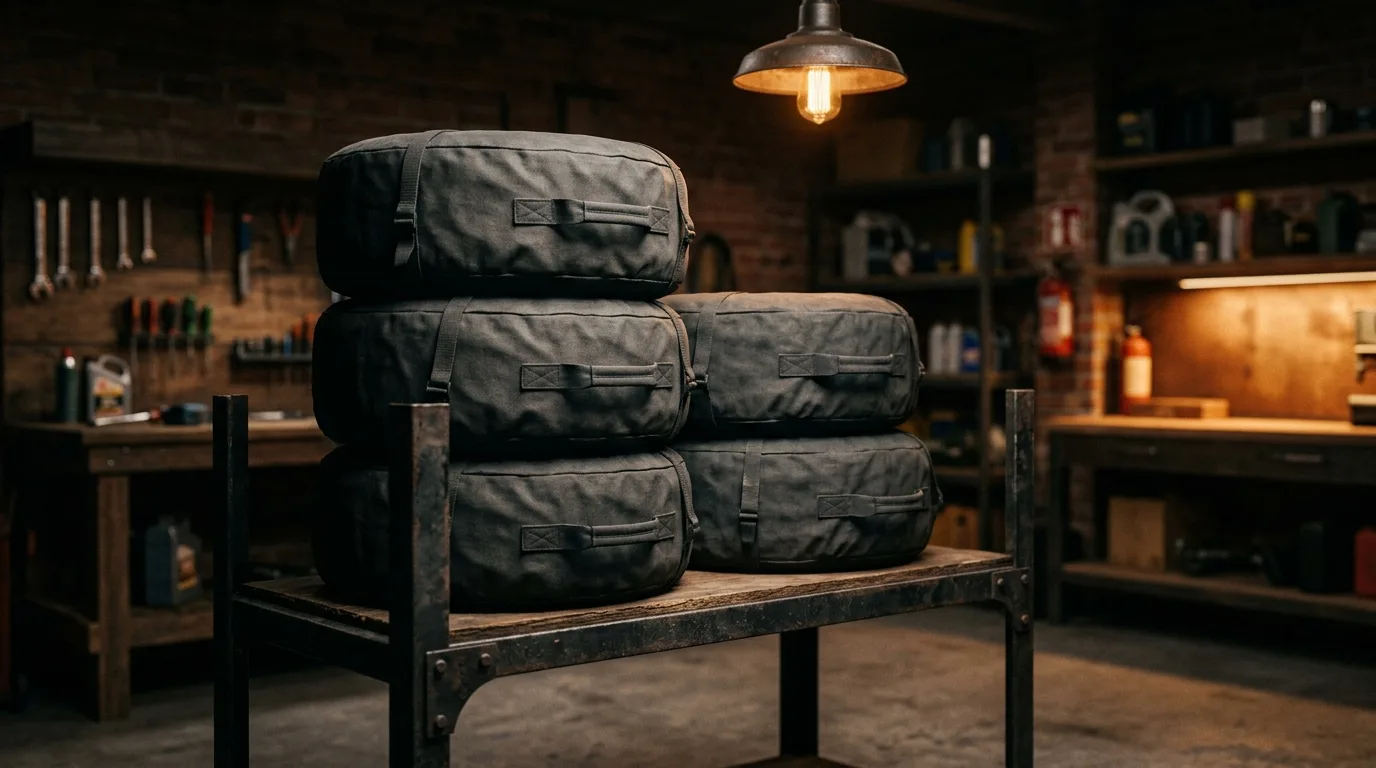
Running winter and summer sets doubles each set's lifespan — but only if the resting set is stored properly. Rubber's enemies are UV light, ozone, heat and deformation. All four are easy to beat.
Before storage: clean and inspect
Wash off road salt and brake dust with water and mild soap, and dry completely — salt left on rubber accelerates aging. While cleaning, check tread depth and look for cracks, bulges or nails: better to discover a dying tire in spring cleaning than in an autumn rush.
Bag them airtight
Large airtight bags (dedicated tire totes or heavy-duty yard bags, taped shut) slow oxidation and keep oils from evaporating out of the rubber. Bag each tire separately if you can.
Position depends on rims
- On rims: stack flat, or hang on wall hooks — the rim carries the load, the rubber doesn't deform.
- Off rims: store upright, standing on the tread, and rotate a quarter turn monthly. Never hang bare tires — the hook point deforms the casing.
Location matters most
Cool, dark, dry, and away from electric motors (furnaces, freezers, sump pumps — they generate ozone, which cracks rubber). A basement beats a garage; a garage beats a balcony. Avoid anywhere with direct sunlight or temperature swings.
Marking and rotation
Chalk the position on each tire when you remove it (FL, FR, RL, RR) so next season you can rotate positions and even out wear across years.
Stored this way, a quality set easily lasts its full tread life across many seasons. And when a set does age out, ExtraBrake has its replacement — all 4 delivered by DHL, often cheaper than the pair-by-pair replacements you'd otherwise be making.
Ready to find your tires?
Search 18,682 tires from 26 brands by size — prices per tire and per set of 4.
Shop tires