When Should You Replace Your Tires? Two Tests That Take a Minute
July 13, 2026 · ExtraBrake
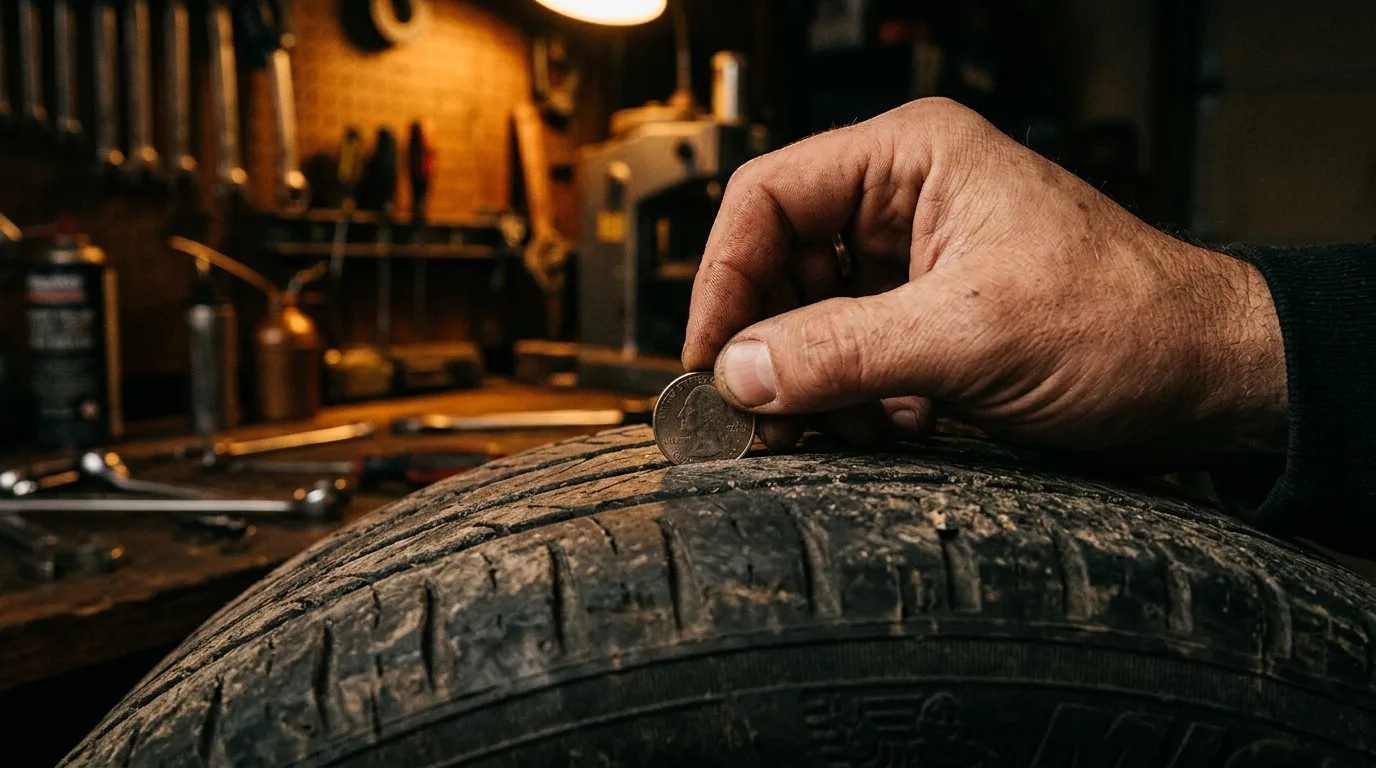
Tires don't fail on a schedule; they fail on tread and age. Both are checkable in your driveway in under a minute.
Test 1: the tread depth check
New tires start around 10–12/32" of tread. The legal minimum in most states is 2/32" — but wet braking performance degrades well before that. Independent testing shows stopping distances in rain grow dramatically below 4/32". The classic check: insert a quarter upside-down into a groove. If you can see the top of Washington's head, you're at or below 4/32" — start shopping. Repeat in several grooves; uneven wear (one shoulder bald, center fine) also signals alignment or inflation problems worth fixing before the new set goes on.
Test 2: the age check
Rubber hardens and cracks with age regardless of miles. Find the DOT code on the sidewall — the last four digits are week and year of manufacture ("3520" = week 35 of 2020). Most manufacturers say tires are done at 10 years no matter what, and recommend inspection from year 6. A garage-queen car with 8-year-old tires that "look fine" is riding on hardened rubber with a fraction of its original wet grip.
Don't-wait warning signs
- Sidewall bulges or bubbles — internal cord damage; replace immediately.
- Cracks in the sidewall rubber deep enough to catch a fingernail.
- Vibration that appeared suddenly and isn't cured by rebalancing.
- Repeated slow leaks in the same tire.
Replacing on your terms
The whole point of checking early: you replace tires when prices and timing suit you, not on a tow truck's schedule. Measure your tread this weekend, and if it's time, your size is a three-click search away — with a full set of 4 delivered by DHL to your door.
Ready to find your tires?
Search 18,682 tires from 26 brands by size — prices per tire and per set of 4.
Shop tires