Mounting and Balancing: What You're Paying For at the Tire Shop
July 5, 2026 · ExtraBrake
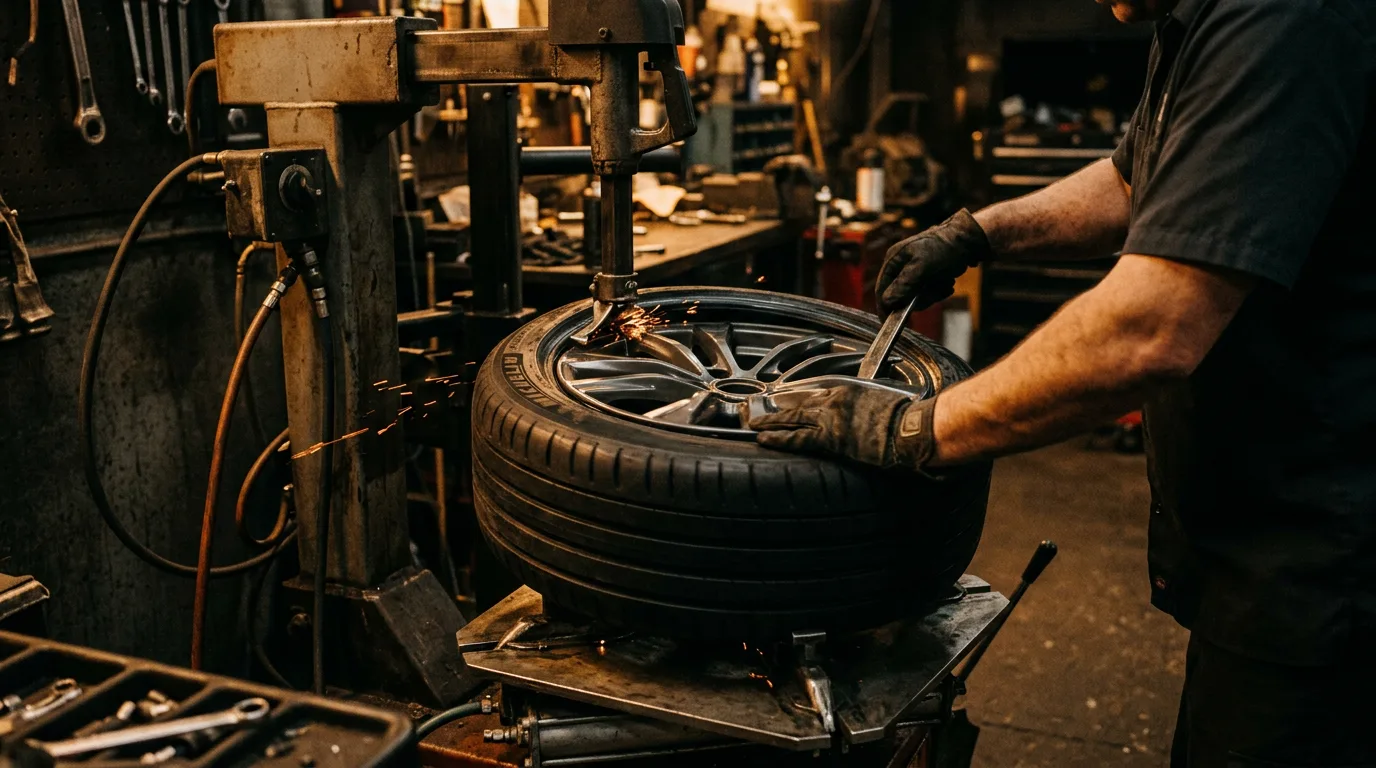
Your tires arrived from ExtraBrake; now a shop turns them into a rolling, vibration-free car. Here's what happens behind the counter, so the invoice makes sense.
Mounting
The old tire is broken off the rim bead, the rim is inspected, and the new tire is lubricated and pressed on with a mounting machine, then seated with a burst of air. Modern low-profile tires and delicate alloy wheels demand careful machine work — this is not a DIY job. Typical cost: bundled into the per-tire fee.
Balancing
No tire or wheel is perfectly uniform. The mounted wheel spins on a balancer that finds the heavy spots; small weights are clipped or stuck to the rim to cancel them. Skipped or sloppy balancing shows up as steering vibration at 60–75 mph. Always included per tire; road-force balancing (the machine presses a roller against the spinning tire to simulate the road) costs a few dollars more and is worth it if you've had stubborn vibrations before.
Valve stems and TPMS service
Rubber valve stems age and crack — replacing them with each new set is cheap insurance and standard practice. If your car has tire-pressure sensors (TPMS), the service kit (seal, nut, core) should be renewed and the sensors re-registered; expect a small per-wheel charge.
Disposal
Old tires carry a recycling fee of a few dollars each, usually mandated by state law. Legitimate and unavoidable.
What to skip
Nitrogen inflation (regular air is 78% nitrogen already), "tire protection plans" duplicating the manufacturer warranty, and same-visit upsells you didn't come for. What to accept: an alignment check with a new set — it protects your new rubber from day one. With a set of 4 tires delivered by DHL and one shop visit, the total install cost is typically $60–$160 — still far below the savings of buying the set online.
Ready to find your tires?
Search 18,682 tires from 26 brands by size — prices per tire and per set of 4.
Shop tires