Tire Pressure: The Five-Minute Monthly Habit That Pays for Itself
July 14, 2026 · ExtraBrake
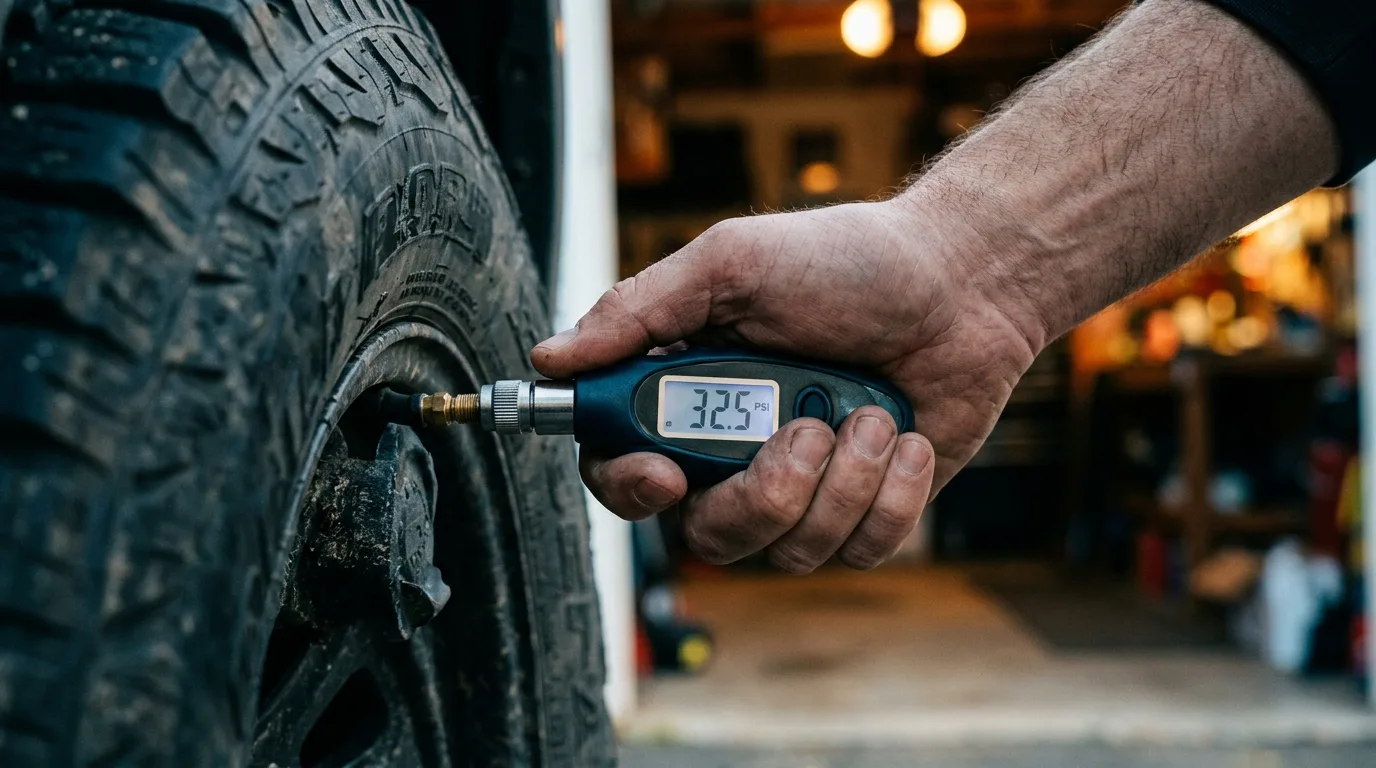
No single tire habit returns more per minute invested than pressure checks. Underinflated tires wear their shoulders, overheat, brake longer, and cost measurable fuel. And they're invisible: a tire can be 25% low and look perfectly normal.
Your number is on the door, not the tire
The pressure molded into the sidewall is the tire's maximum, not your target. Your car's specified pressure is on the driver's door jamb sticker — typically 32–36 psi. That's the number the suspension, braking and fuel-economy figures were engineered around. Some cars specify different front/rear pressures and higher values for full load; the sticker covers it.
Measure it right
- Cold tires — before driving, or after 3+ hours parked. Driving warms the air and inflates the reading by several psi.
- Monthly, and before long trips — tires naturally lose about 1 psi per month, plus 1 psi per 10°F temperature drop. The first cold week of fall is when half the cars on the road go underinflated at once.
- Use your own gauge — a $10 digital gauge beats guessing and beats the gas-station dial that's been dropped a thousand times.
What TPMS does and doesn't do
The tire-pressure warning light is a last line of defense, legally required to trigger at 25% below spec — by which point you've been wearing tires and burning fuel for weeks. Treat the light as an emergency signal, not a maintenance system.
The payoff
Correct pressure extends tread life by thousands of miles, saves roughly 1–3% in fuel, and preserves the wet-braking margin you'll want in an emergency stop. And when tires do wear out on schedule instead of early, ExtraBrake is where a full set of 4 costs less than the pair-plus-pair path — delivered by DHL to your door.
Ready to find your tires?
Search 18,682 tires from 26 brands by size — prices per tire and per set of 4.
Shop tires