Run-Flat Tires: Worth It, or Clever Marketing?
July 4, 2026 · ExtraBrake
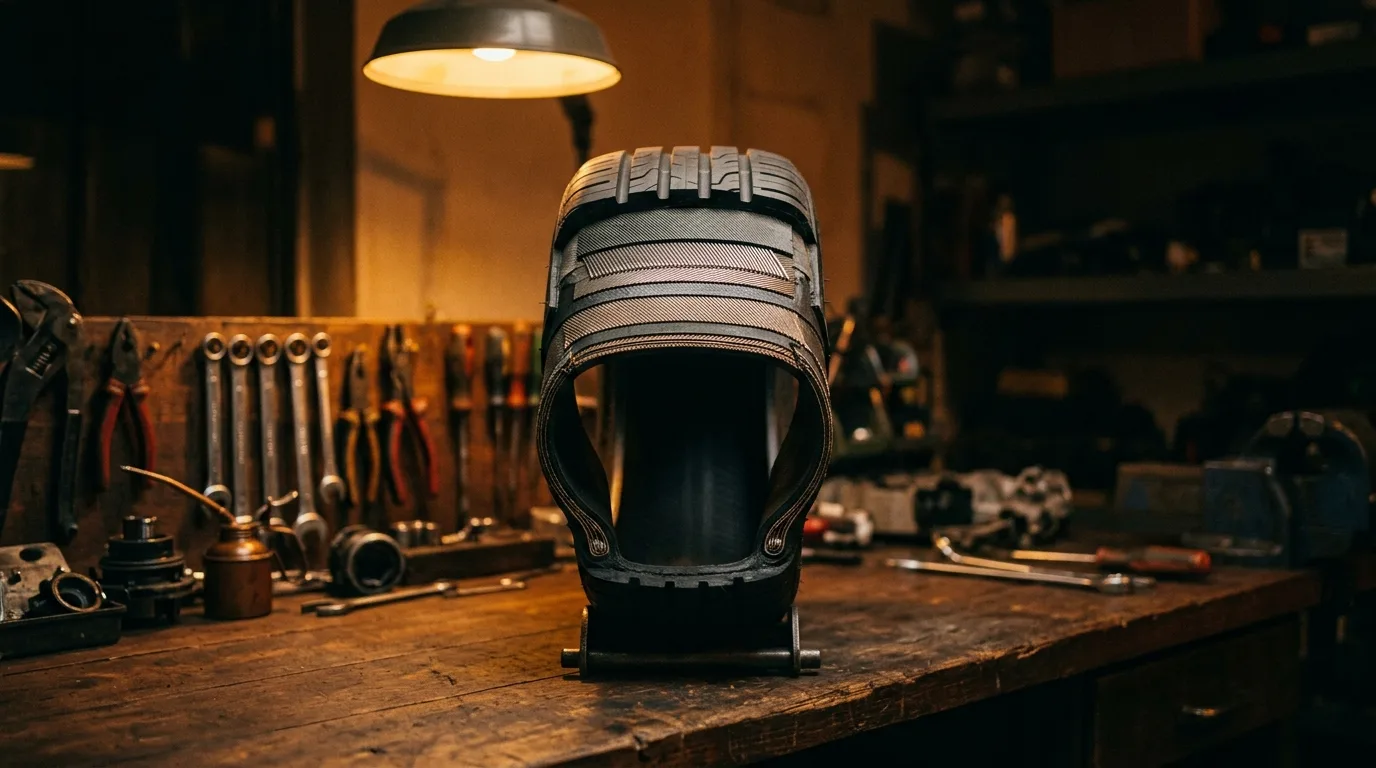
A run-flat tire has sidewalls stiff enough to carry the car with zero air pressure — typically for 50 miles at up to 50 mph. That's genuinely useful. Whether it's useful for you depends on trade-offs the brochures skip.
The case for run-flats
- No roadside tire changes. A puncture on a dark highway becomes "drive calmly to a shop" instead of a jack on the shoulder.
- No spare needed. Cars designed for run-flats often have no spare wheel at all, saving trunk space and weight.
- Stability during sudden deflation. The stiff sidewall keeps the car controllable in a rapid blowout — the scenario where normal tires are at their worst.
The case against
- Ride comfort. Those reinforced sidewalls transmit every expansion joint. Even modern run-flats ride noticeably firmer.
- Price and replacement. Run-flats cost more, and after being driven flat they usually must be replaced, not repaired.
- Weight and rolling resistance. More material means slightly higher fuel consumption and slower steering response.
The practical answer
If your car came with run-flats and no spare, stay with run-flats unless you buy a spare kit — being stranded without either is the worst of both worlds. If your car has a spare (or you carry a repair kit and compressor), conventional tires ride better and cost less, and a tire-pressure monitoring system covers the early-warning role. Towing drivers and rural commuters far from shops often value the run-flat safety net; city drivers near a dozen tire shops rarely need it.
You can filter for run-flats directly in the ExtraBrake catalog — every product page marks run-flat capability in the specs, priced per tire and per set of 4.
Ready to find your tires?
Search 18,682 tires from 26 brands by size — prices per tire and per set of 4.
Shop tires